Jul 10, 2026
How to Choose the Right Laser Cutting Nozzle Size?
Learn how to choose the correct laser cutting nozzle size based on laser power and material thickness. Improve cutting quality and reduce operating costs.
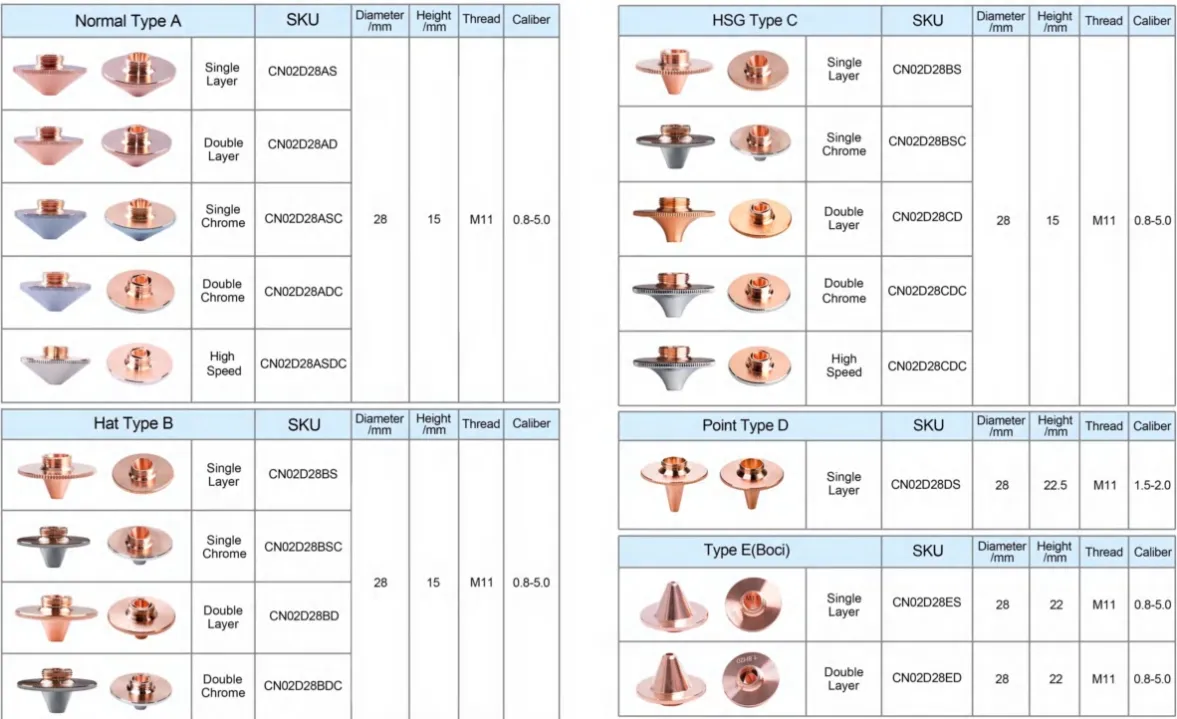
The laser cutting nozzle is a small but critical component in fiber laser cutting machines. Although the nozzle does not directly generate the laser beam, it plays an important role in controlling assist gas flow, cutting stability, and final cutting quality.
Many users experience problems such as:
- Excessive burrs
- Poor cutting quality
- Unstable cutting process
- Increased gas consumption
- Nozzle damage
In many cases, the problem is not the laser power itself, but an incorrect nozzle selection.
This guide explains how to choose the right laser nozzle size based on material thickness, laser power, and cutting application.
Why Does Laser Nozzle Size Matter?
The nozzle caliber directly affects:
- Gas flow speed
- Gas pressure distribution
- Slag removal ability
- Cutting stability
A nozzle that is too small may result in insufficient gas flow, while a nozzle that is too large may reduce gas pressure and cutting efficiency.
Choosing the correct nozzle helps achieve:
- Better cutting quality
- Cleaner edges
- Lower gas consumption
- Longer nozzle service life
Common Laser Nozzle Types
Single Layer Nozzle
Single layer nozzles are mainly used for:
- Stainless steel cutting
- Nitrogen cutting
- Thin and medium thickness materials
Advantages:
- Stable gas flow
- Good cutting precision
- Suitable for high-quality edge requirements
Double Layer Nozzle
Double layer nozzles are commonly used for:
- Carbon steel cutting
- Oxygen cutting
- Thicker materials
Advantages:
- Better protection against heat
- Stronger gas flow
- Improved cutting performance on thick plates
How to Choose Nozzle Caliber?
The most common nozzle calibers include:
1.0mm / 1.2mm / 1.5mm / 2.0mm / 2.5mm / 3.0mm
The selection mainly depends on laser power and material thickness.
Reference Guide:
| Laser Power | Material Thickness | Recommended Nozzle Size |
| 1kW-2kW | Thin metal ≤3mm | 1.0-1.5mm |
| 2kW-4kW | Medium thickness 3-10mm | 1.5-2.0mm |
| 6kW-12kW | Thick plate 10-30mm | 2.0-3.0mm |
| 12kW+ | Heavy cutting applications | 2.5-3.0mm |
*Note: The actual nozzle choice may vary depending on material type, cutting gas, and machine settings.
How Material Thickness Affects Nozzle Selection
Thin Sheet Metal Cutting
For thin materials, a smaller nozzle diameter is usually preferred.
Advantages:
- Higher gas pressure
- More precise cutting
- Better edge quality
Example:
For stainless steel sheets below 3mm, a 1.0mm or 1.2mm nozzle is commonly used.
Medium Thickness Cutting
For materials between 3mm and 10mm, a medium nozzle size provides a balance between gas pressure and cutting efficiency.
Recommended:
- 1.5mm nozzle
- 2.0mm nozzle
Thick Plate Cutting
When cutting thick carbon steel or stainless steel, a larger nozzle is required.
Advantages:
- Higher gas flow
- Better slag removal
- More stable cutting process
Recommended:
- 2.0mm-3.0mm nozzle
Common Problems Caused by Incorrect Nozzle Selection
1. Excessive Burrs
Possible causes:
- Nozzle diameter too large
- Gas pressure too low
- Incorrect cutting parameters
Solution:
Try a smaller nozzle or optimize gas pressure.
2. Unstable Cutting
Possible causes:
- Nozzle damaged
- Nozzle center not aligned
- Wrong nozzle size
Solution:
Check nozzle condition and ensure proper installation.
3. High Gas Consumption
A nozzle that is too large may increase gas consumption without improving cutting quality.
Choosing the correct nozzle size can reduce operating costs.
Relationship Between Nozzle and Laser Cutting Head
Modern fiber laser cutting systems use professional cutting heads from brands such as:
- Raytools
- WSX
- Precitec
- Bodor
- Hans
The nozzle must match the cutting head design and thread specifications.
A suitable nozzle ensures stable cooperation between:
- Laser head
- Protective lens
- Focus lens
- Assist gas system
Nozzle Maintenance Tips
To extend nozzle service life:
- Check nozzle opening regularly
- Remove metal slag in time
- Avoid collisions during operation
- Replace deformed nozzles immediately
- Keep the nozzle center aligned with the laser beam
A damaged nozzle can directly affect cutting accuracy and may even cause protective lens damage.
Conclusion
Choosing the correct laser cutting nozzle size is essential for achieving stable cutting performance.
The right nozzle selection depends on:
- Laser power
- Material thickness
- Cutting gas
- Material type
- Cutting quality requirements
As a professional one-stop fiber laser accessories supplier, we provide high-quality laser consumables compatible with major brands including Raytools, WSX, Precitec, Bodor, Hans, IPG, Raycus, and MAX.
With the right nozzle and proper maintenance, your fiber laser cutting machine can achieve better efficiency, lower operating costs, and longer service life.