Sep 4, 2026
How to Reduce Distortion When Handheld Laser Welding Thin Metal?
Thin metal requires careful heat control. Proper power, speed, clamping, wobble, and welding sequence can help reduce distortion and produce cleaner, more consistent welds.
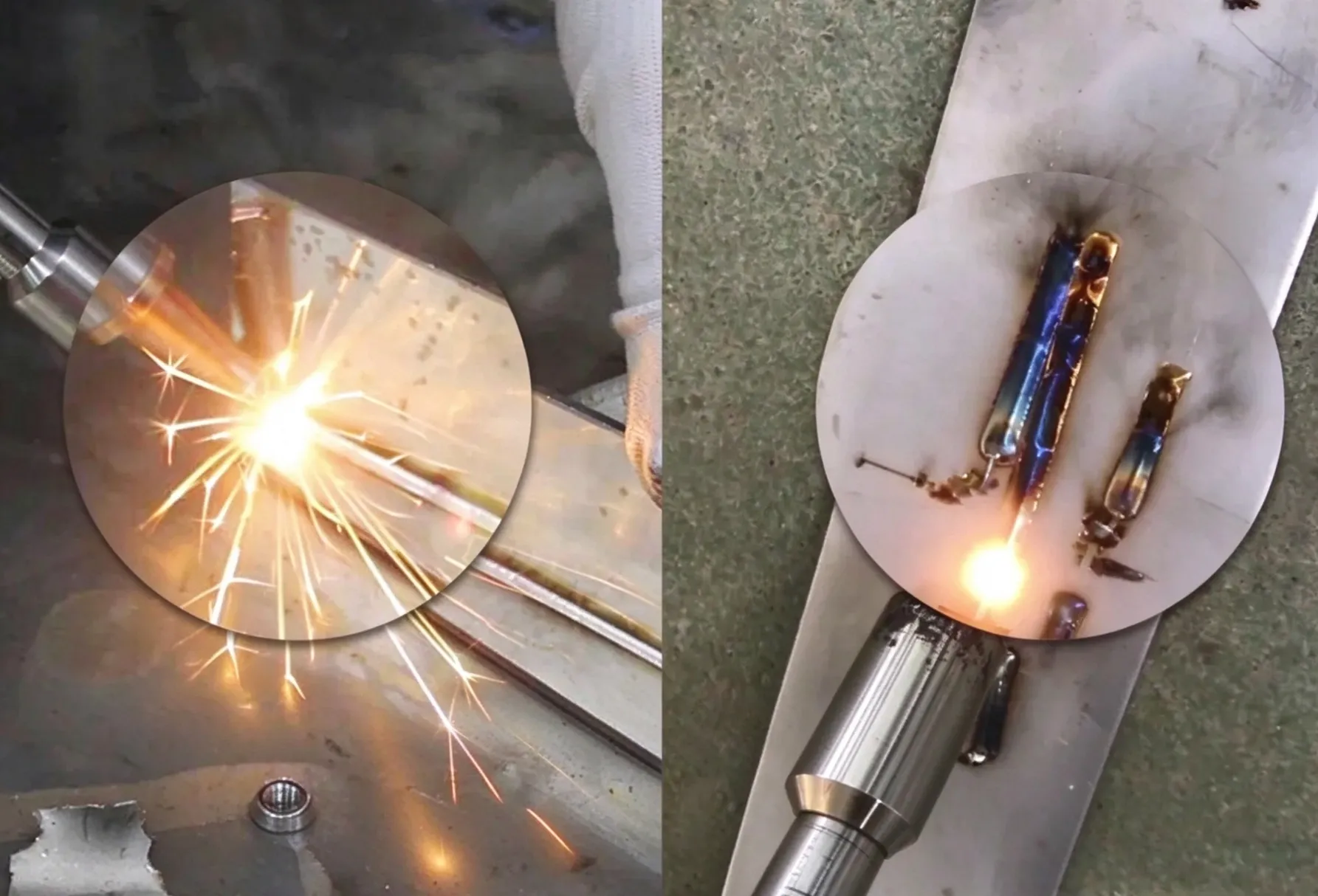
Thin metal is fast to weld with a handheld laser welding machine, but excessive heat can quickly cause warping, deformation, or uneven surfaces.
The key is not simply to reduce laser power. Heat input, welding speed, clamping, and welding sequence all affect the final result.
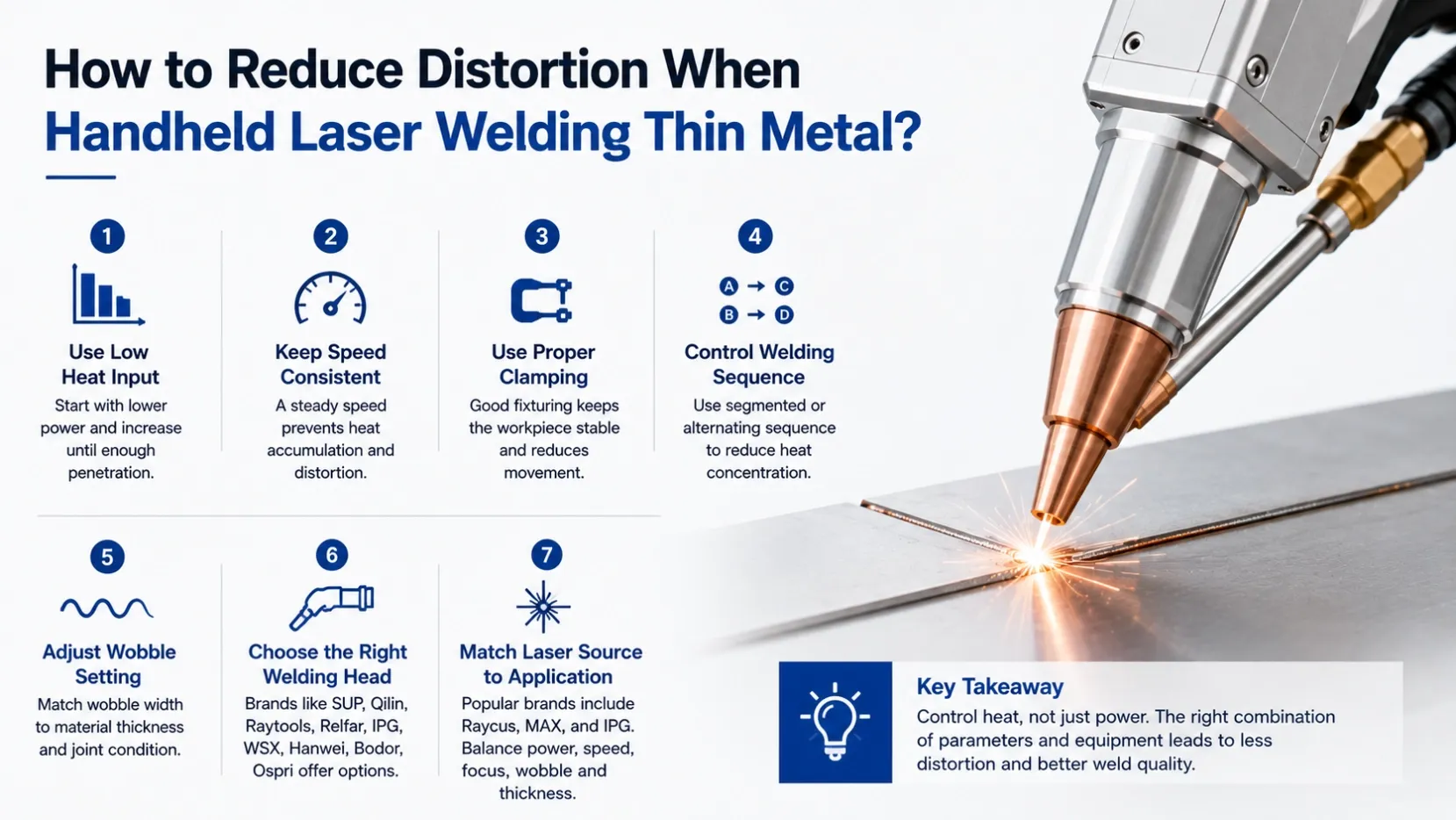
1. Use the Lowest Effective Heat Input
For thin sheets, too much laser energy can cause the material to bend or burn through.
Instead of using maximum power, start with a lower setting and gradually increase it until you achieve sufficient fusion.
A good weld should provide enough penetration without unnecessarily heating the surrounding metal.
2. Keep the Welding Speed Consistent
Welding too slowly keeps the laser in one area for too long, increasing heat accumulation.
This can lead to:
- Sheet deformation
- Burn-through
- A wider heat-affected area
- Uneven weld appearance
Try to maintain a steady hand movement rather than repeatedly stopping at the same location.
3. Use Proper Clamping
Even with correct laser parameters, thin sheets can move during welding.
Simple fixtures or clamps can help keep the workpieces aligned and reduce deformation.
For production work, consistent positioning is especially important because the same joint should be held in the same position for every weld.
4. Don't Ignore the Welding Sequence
For larger thin-sheet components, welding continuously from one end to the other can concentrate heat in one area.
A better approach may be to use a segmented or alternating welding sequence.
For example:
A → C → B → D
instead of:
A → B → C → D
This gives previously welded areas more time to cool and can reduce overall distortion.
5. Choose the Right Laser Beam and Wobble Setting
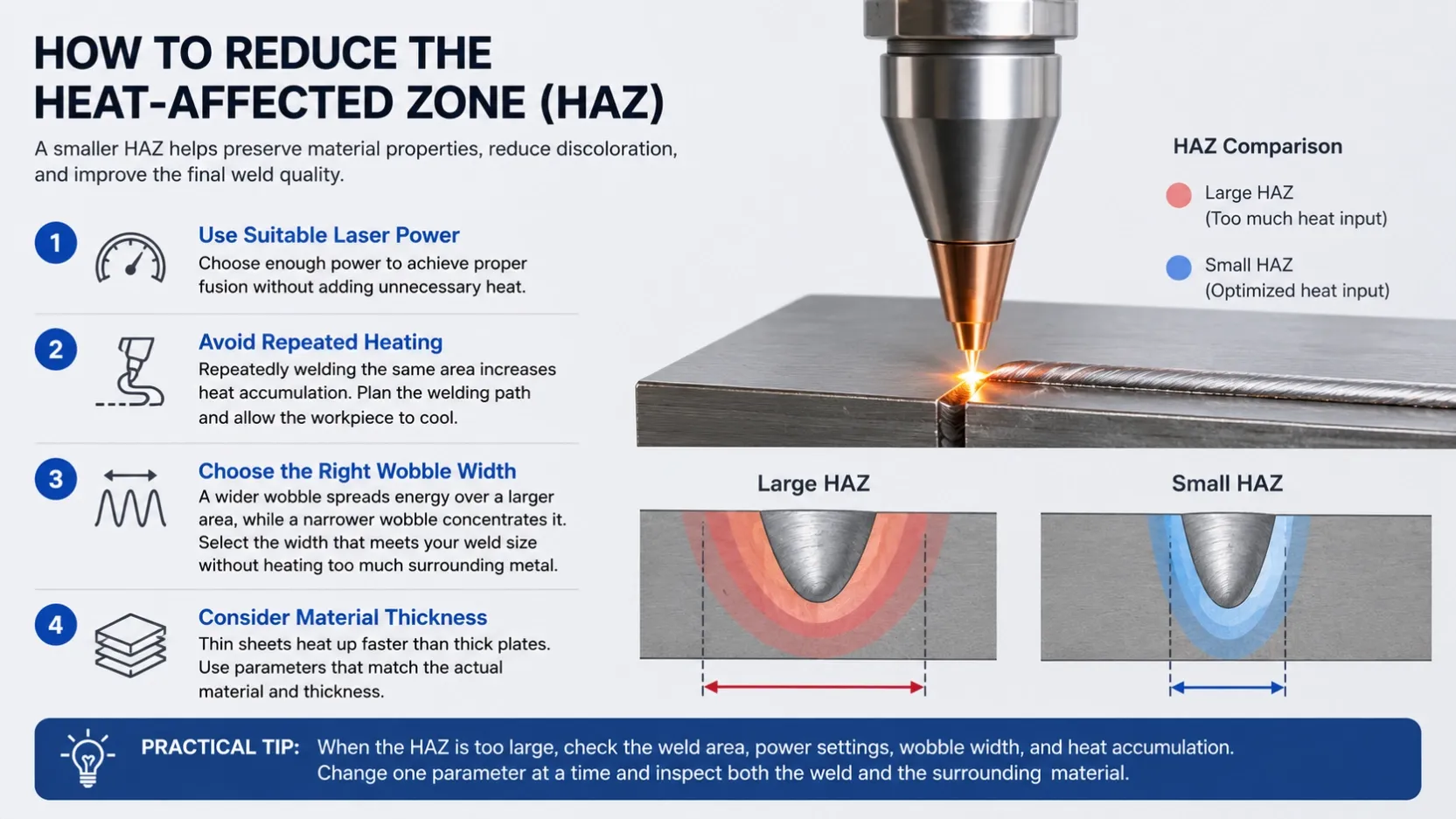
A wider wobble pattern distributes the laser energy over a larger area, while a smaller pattern concentrates the energy more strongly.
For thin materials, excessive wobble width can increase the heated area and reduce penetration.
Therefore, wobble width should be matched to the material thickness and joint condition, rather than simply using the largest available setting.
6. Pay Attention to the Handheld Welding Head
Different systems, such as SUP, Qilin, Raytools, Relfar, IPG, WSX, Hanwei, Bodor, and Ospri, may have different optical configurations and wobble capabilities.
When replacing a Handheld Welding Head, make sure its configuration matches the laser source, power level, focal requirements, and welding application.
7. Laser Source and Power Must Match the Application
However, the laser source alone does not determine the final welding result.
The actual heat input depends on the complete setup:
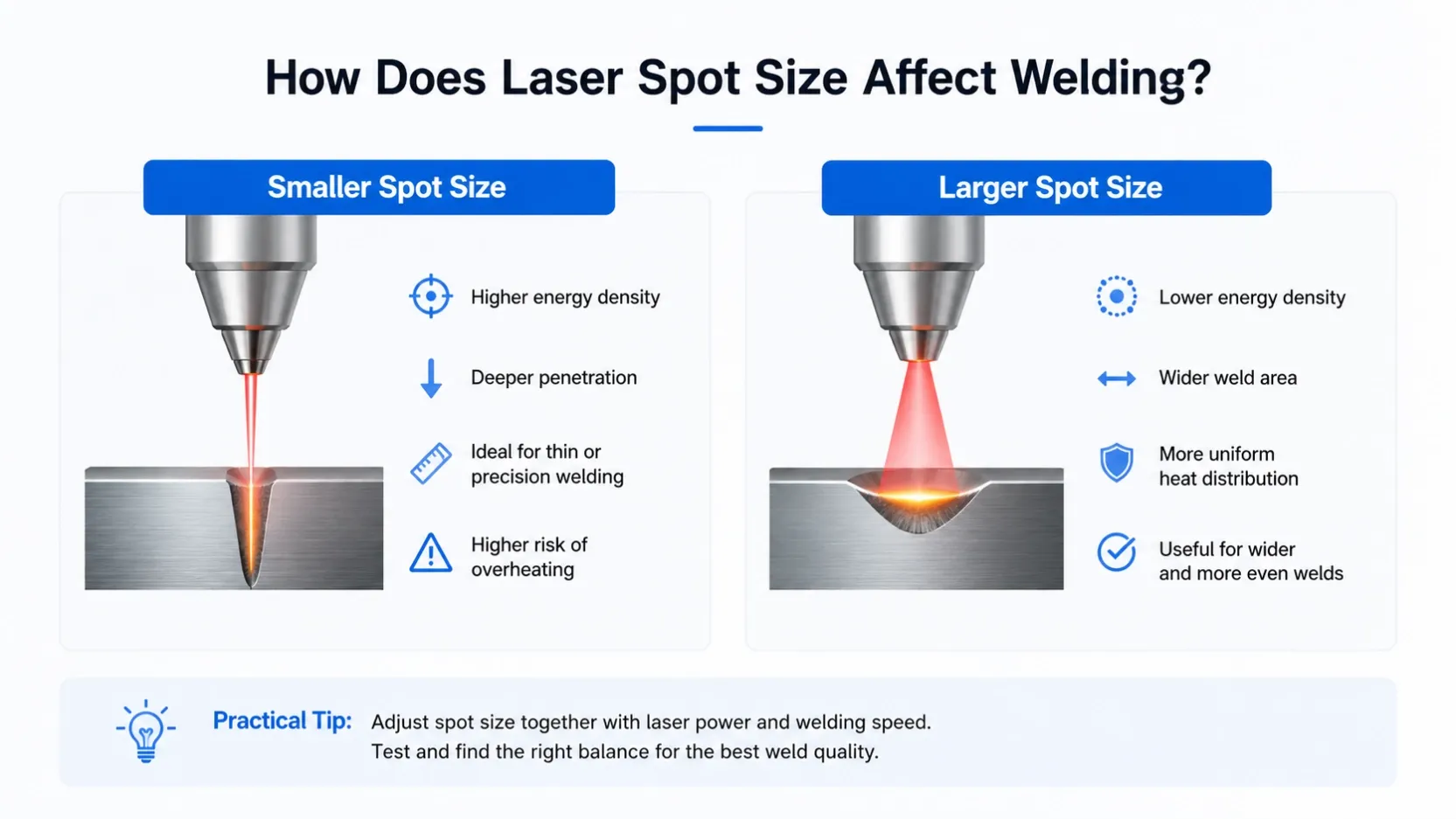
Laser Power + Welding Speed + Focus + Wobble + Material Thickness
For thin sheet welding, finding the right balance is much more important than simply choosing a higher-power laser.
A Simple Starting Strategy
If thin metal is deforming during welding, check these points in order:
① Is the laser power too high?
↓
② Is the welding speed too slow?
↓
③ Is the sheet properly clamped?
↓
④ Is the wobble width appropriate?
↓
⑤ Is the welding sequence causing heat accumulation?
This is usually more effective than changing several parameters at the same time.
Thin-metal welding is mainly about controlling heat, not simply reducing power.
A stable welding speed, proper clamping, suitable wobble settings, and a well-matched Handheld Welding Head and laser source can significantly reduce deformation while maintaining good weld penetration and appearance.